Blog
Two kinds of writing live here. Long-form guides that work through one topic end-to-end (tax regimes, SIP math, home loan strategy). Timely news posts reacting to budget changes, RBI rate moves and tax-rule tweaks. Each piece pairs with one or more calculators so you can run the math on your own numbers as you read.
-
 guide
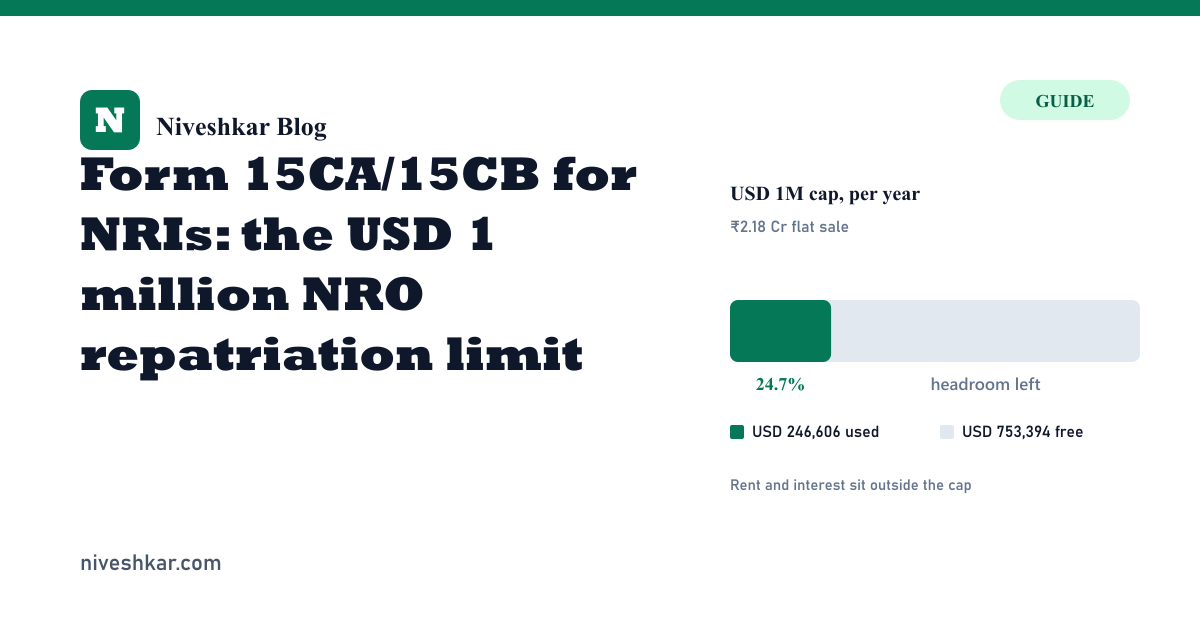
guideForm 15CA/15CB for NRIs: the USD 1 million NRO repatriation limit
Form 15CA/15CB for NRI remittances: when Form 15CB is needed, the USD 1 million NRO cap, and the April 2026 renumbering to Form 145/146.
nrirepatriationfemafy26Read the full post → -
 guide
guideNRI ITR filing FY 2025-26: the 31 July deadline, which form, and the Form 67 trap
NRI ITR filing FY 2025-26: the 31 July deadline, ITR-2 vs ITR-3, Form 67 for foreign tax credit, and e-verifying from abroad without an Aadhaar OTP.
nriitrtaxfy26Read the full post → -
 guide
guideDTAA relief for NRIs: how to stop paying tax twice (TRC, Form 10F, and the two methods)
How NRIs claim double-taxation relief on India income — the source rate cap, credit vs exemption method, and the TRC + Form 10F paperwork most people skip.
nridtaataxfy26Read the full post → -
 guide
guideNRI capital gains and TDS on redemption: why your payout is smaller than the tax
How capital gains work for NRIs — the same rates as residents but collected as TDS at source, the ignored ₹1.25 lakh equity exemption, debt-fund slab withholding, DTAA, and getting the refund.
nricapital-gainstdsfy26Read the full post → -
 guide
guideTDS on sale of property by an NRI: Section 195, Form 13, and the refund trap
How TDS works when an NRI sells property in India — Section 195 on the full sale value, why it's not 1%, and how Form 13 stops lakhs getting locked up as a refund.
nritdspropertyfy26Read the full post → -
 guide
guideIncome tax for NRIs (FY26): what India actually taxes, and the RNOR window
A plain guide to NRI income tax in India — how residency decides everything, what income is taxable, NRE/NRO/FCNR treatment, TDS, and the RNOR window returning NRIs miss.
nritaxrnorfy26Read the full post → -
 guide
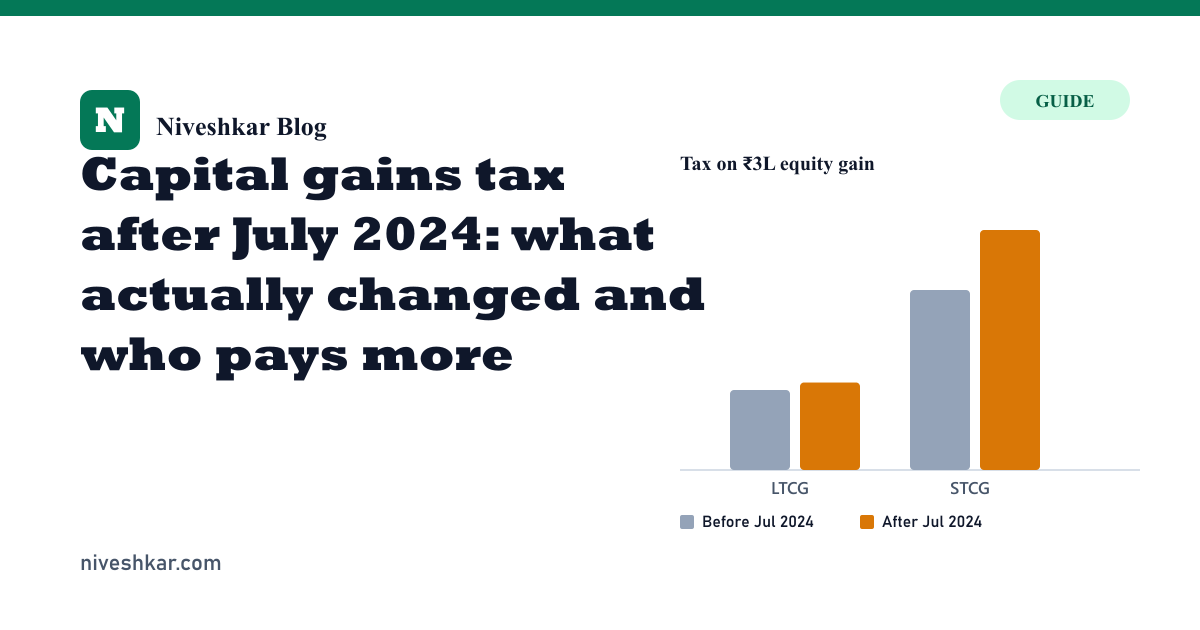
guideCapital gains tax after July 2024: what actually changed and who pays more
The 23 July 2024 capital gains overhaul, explained: 12.5% LTCG, the ₹1.25 lakh equity exemption, 20% equity STCG, and the property indexation trade-off.
taxcapital-gainsltcgfy26Read the full post → -
 guide
guideNPS Tier-1 vs equity mutual funds: which builds the better retirement?
NPS vs equity mutual funds for retirement: the 80CCD(1B) deduction, the forced 40% annuity, tax at every stage, and why most people should use both.
retirementnpsmutual-fundsfy26Read the full post → -
 guide
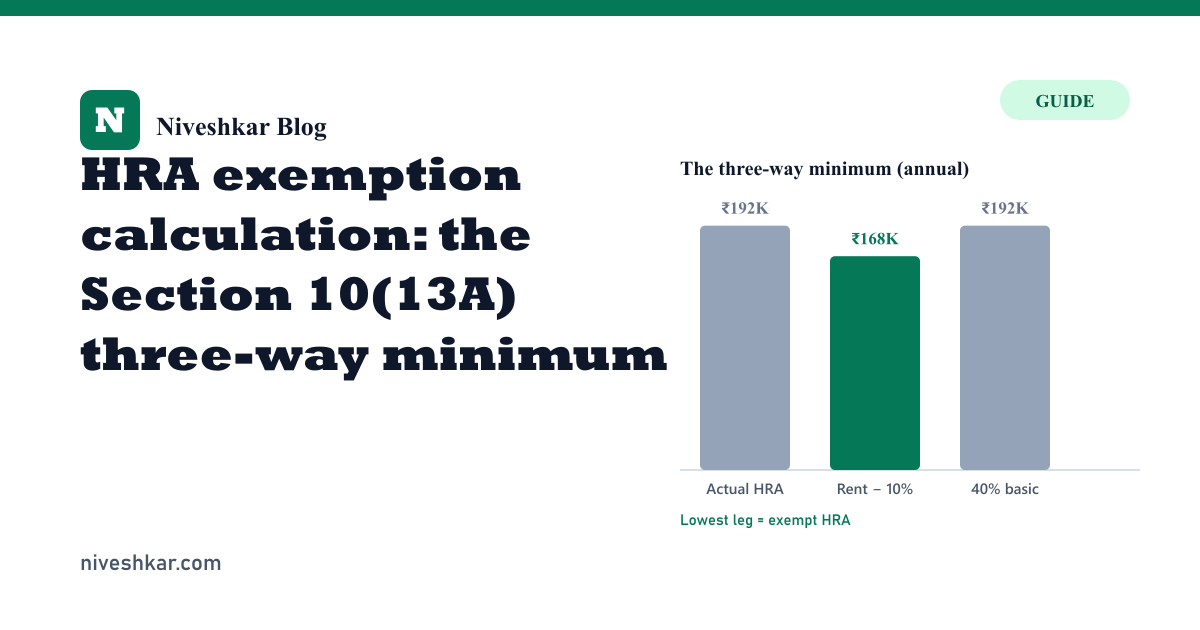
guideHRA exemption calculation: the Section 10(13A) three-way minimum explained
HRA exemption calculation made simple: the Section 10(13A) three-way minimum, metro vs non-metro, rent to parents, and why the new regime kills it.
taxhrafy26Read the full post → -
 guide
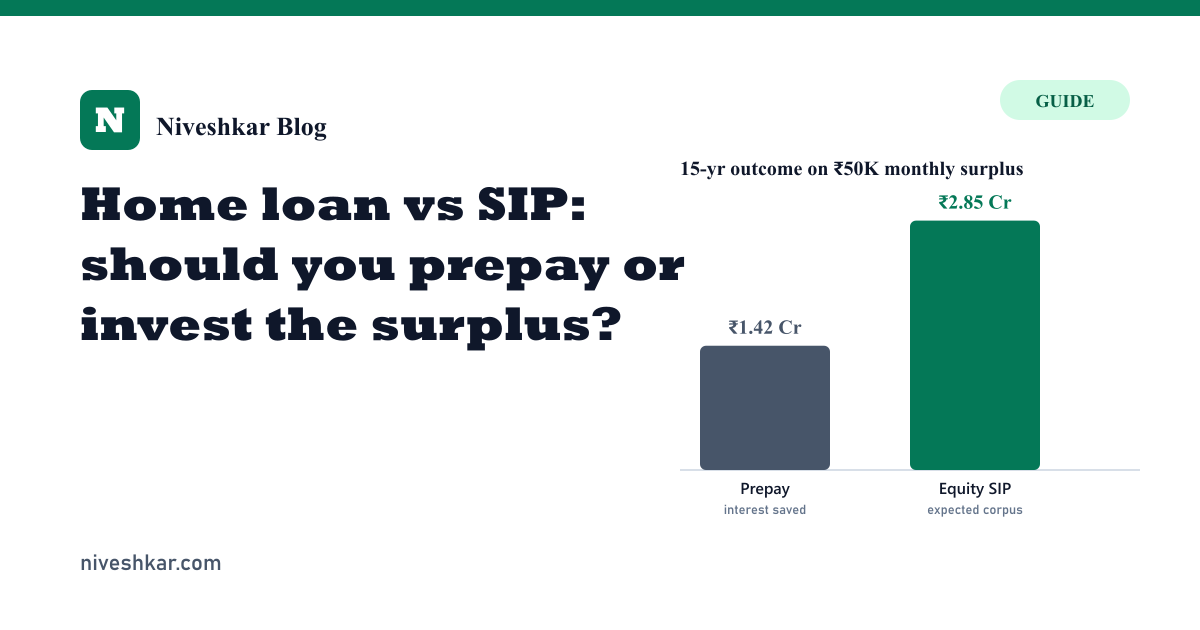
guideHome loan vs SIP: should you prepay or invest the surplus?
Home loan vs SIP: post-tax loan cost after Section 24 vs post-tax SIP return, worked at 3 salary slabs and the income where math flips.
home-loaninvestingtaxRead the full post → -
 guide
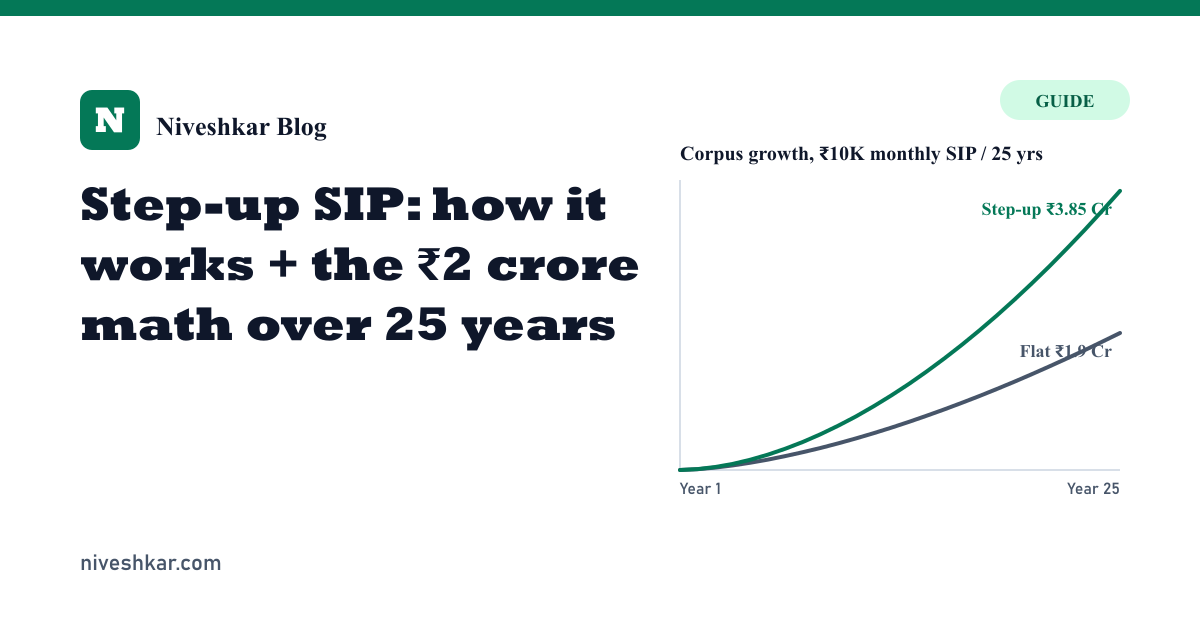
guideStep-up SIP: how it works + the ₹2 crore math over 25 years
Step-up SIP math: a 10% annual increase roughly doubles a 25-year corpus vs a flat SIP. The cashflow plan that keeps it running, mistakes that halve it.
sipinvestingcompoundingRead the full post → -
 guide
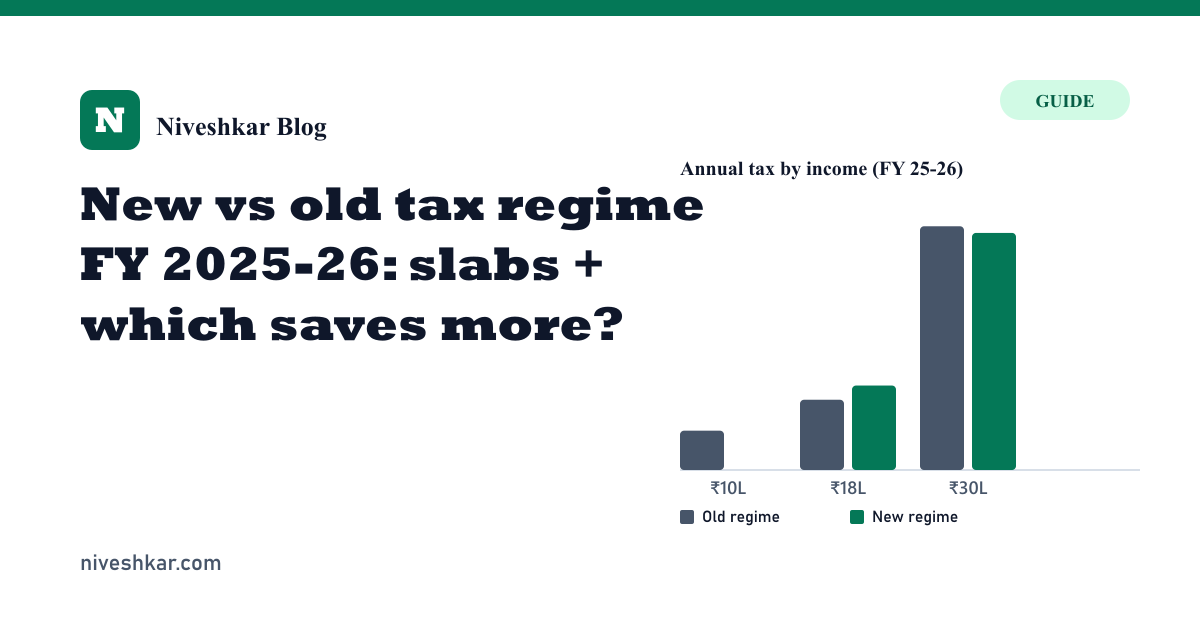
guideNew vs old tax regime FY 2025-26: slabs + which saves more?
New tax regime vs old, FY 2025-26: actual numbers on which saves more between ₹7L and ₹50L CTC after Budget 2025 slabs + ₹12L rebate.
taxsalaryfy26Read the full post →
Coming next
Topics queued for the next few months. The order may shift based on what readers ask for on the contact page, and on which calculators land in the popular set first.
- PPF, EPF and VPF: who should use whichThree EEE-or-near-EEE instruments, three completely different use cases. A side-by-side on contribution caps, lock-ins, withdrawal flexibility, and where Voluntary Provident Fund quietly wins.
- Capital gains tax on mutual funds, after July 2024The post-budget LTCG rate of 12.5% above ₹1.25 lakh per year, debt funds under Section 50AA, what counts as equity for tax, and how to sequence redemptions to minimize the bill.
- NPS Tier-1 vs equity MF for retirementNPS gives an extra ₹50,000 Section 80CCD(1B) deduction and lower fund-management charges, but locks 60% as taxable annuity. A 25-year corpus comparison at realistic return assumptions.
- HRA exemption, the real Section 10(13A) mathWalk-through of the three-way minimum (HRA received, rent − 10% basic, 50/40% of basic) with metro vs non-metro caveats, employer rejection scenarios, and parent-rent landlord arrangements.
Why calculators come first
Finance content on the Indian internet is mostly thin: a 600-word post that summarizes the same generic SIP advice everyone else has written, with a calculator buried at the bottom as a feature. We took the opposite path. Build the calculator first, because the math is what people actually need. Write the long-form prose alongside it, because the assumptions and the regulatory basis matter as much as the number.
Each calculator carries its own structured guide: what the instrument is, how the formula works, a worked example with real Indian numbers, common mistakes specific to the Indian context, a tax callout and 10 FAQs. The guides in this section pull threads across multiple calculators rather than repeat that ground.
Subscribe via RSS to get new posts as they ship.